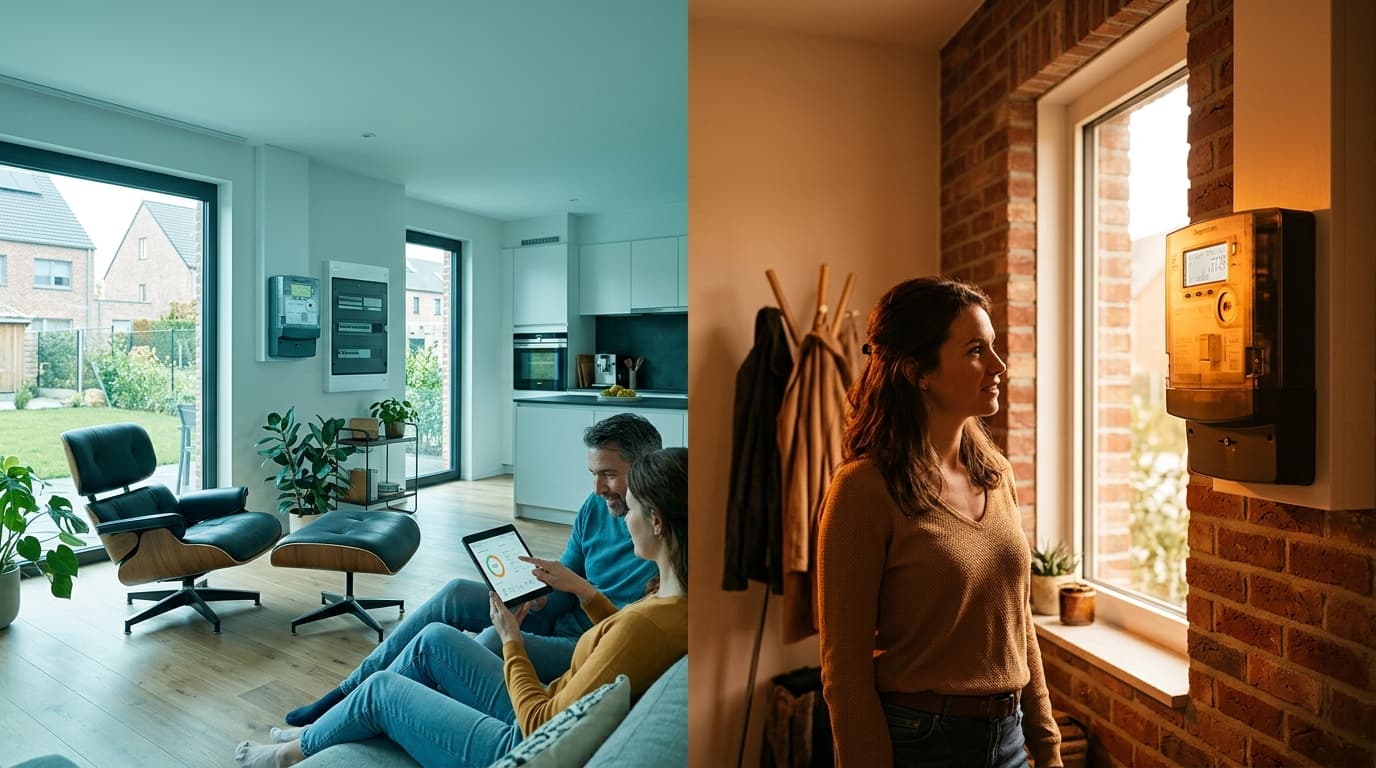
Mega or Engie: it's one of the most common head-to-heads when a Belgian household looks to pay less for electricity. On one side, Engie, the country's best-known incumbent; on the other, Mega, the 100% Belgian challenger that dominates the comparison tables. Here is what really separates them in 2026, and how to choose based on your profile. For the full market picture, see our ranking of the best electricity suppliers.
Mega or Engie: which is cheaper?
Mega is almost always cheaper than Engie. On a variable contract, the Belgian supplier shows a price per kWh often around €0.16, versus about €0.19 with Engie, a gap of 10-15% for the same electricity. Engie, as an incumbent, partly bills its brand and network; Mega, leaner and fully online, passes its lower costs on to the bill. That is precisely what regularly puts it at the top of the Test-Achats Energy barometer for price/service value.
What is the concrete price difference over a year?
For an average household using 3,500 kWh per year, the gap between Mega and Engie often exceeds €150 over the year, on electricity alone. Take a typical Walloon home: by moving from an Engie variable contract to the equivalent at Mega, it generally saves between €150 and €220 per year without changing anything in its consumption. The gap grows further if you add gas. Beware, though: Engie, like Luminus, sometimes offers welcome promotions that narrow the gap in the first year, before the tariff climbs back. The good habit is still to compare every year.
Does Engie have advantages Mega doesn't?
Yes: Engie keeps the advantage of size. The group has a network of physical branches, extensive phone support, a very wide range (fixed, green offers, home automation options, breakdown services) and a reputation that reassures. For a customer who wants an established, multi-service provider and for whom price is not the only criterion, Engie remains a defensible choice. Mega assumes a simpler model: fewer options, but a clear offer and a low price. If you like managing everything online without frills, the lack of a Mega branch isn't a problem.
Mega or Engie for green electricity?
Neither is the best choice for genuinely local green power. Both offer "green" deals based largely on guarantees of origin, a mechanism that greens electricity on paper without guaranteeing Belgian generation. If ecological impact is your priority, suppliers like Bolt or the Ecopower cooperative rely on far more credible Belgian renewable generation. Strictly between Mega and Engie, Engie's green offer is more developed, but the price gap remains unfavourable to the incumbent.
Which supplier should you choose for your profile?
For most households that simply want to pay less, Mega wins. It's the default choice for a home that watches its bill, is comfortable with online management and a variable tariff. Engie suits a different profile: someone who values a large network, phone service and a wide range of services, and who accepts paying a little more for that peace of mind. A cautious household worried about price rises can, with either, opt for a one-year fixed contract — a little pricier, but locked.
How do you switch from Engie to Mega (or vice versa)?
Switching is free, causes no cut and is handled by the new supplier. In practice, you sign up with Mega (or Engie) with a recent bill to hand — for your EAN code and annual consumption — and the new supplier notifies the old one and organises the changeover. The physical network, run by your distribution operator (Ores, Fluvius, Resa or Sibelga depending on your municipality), does not change: electricity keeps flowing without interruption. Household contracts can be cancelled at any time with one month's notice, free of charge.

In short, if your goal is to pay a fair price for your electricity, Mega beats Engie in most cases. Engie keeps its place for those who prioritise the size and services of a large group. Before signing, always check your exact case on the official CREG or VREG comparator, and compare the whole market in our ranking of electricity suppliers.

Fournisseurs comparator
Compare all fournisseurs side by side.
Compare now →
Frequently asked questions
Julien suit le marché belge de l'énergie depuis plus de dix ans. Il a comparé des centaines d'offres d'électricité pour des ménages wallons, bruxellois et flamands, décortiqué les grilles tarifaires de Mega, Bolt, Luminus, Engie ou Eneco, et épluché les rapports de la CREG, du VREG et de la CWaPE. Sa conviction : la plupart des Belges paient leur électricité trop cher faute d'avoir comparé. Sur ce site, il traduit le jargon énergétique en conseils concrets, chiffrés et sans publicité déguisée.