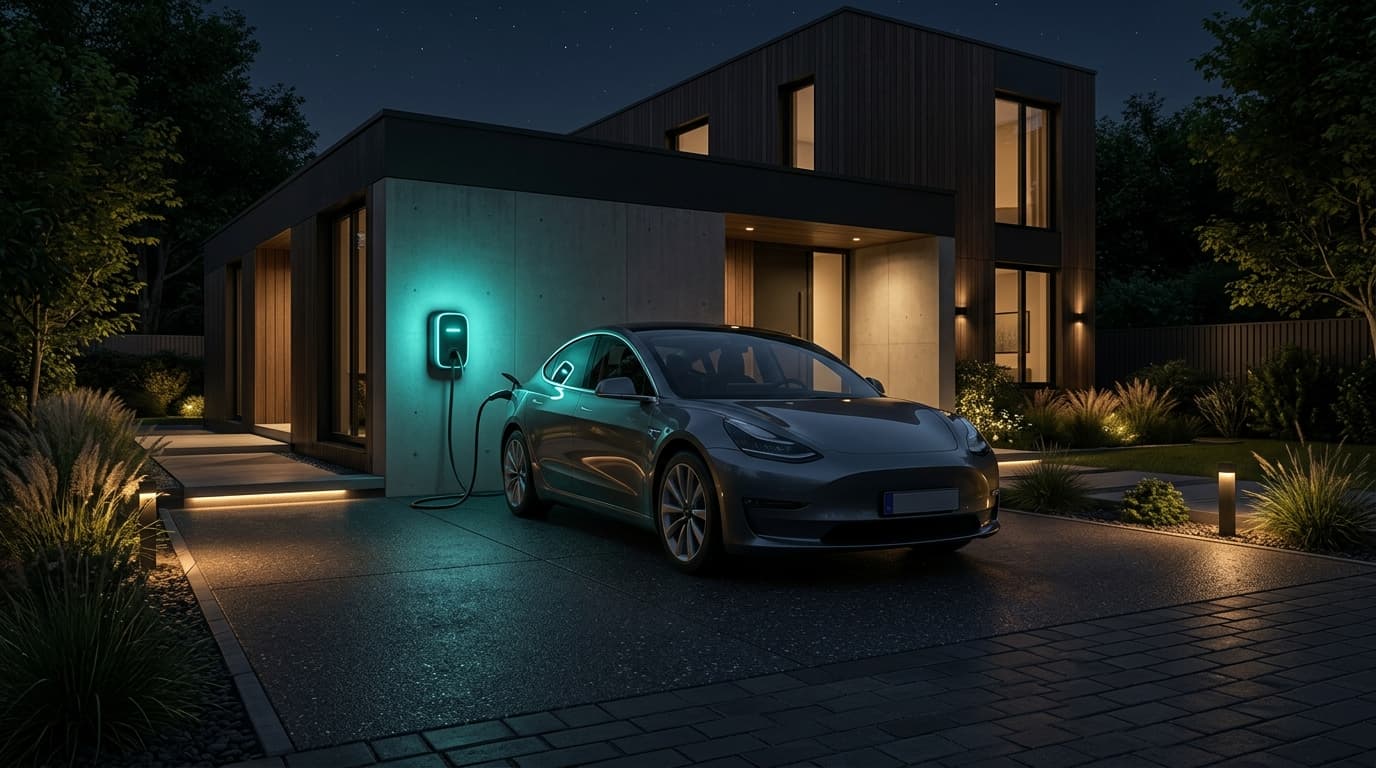
Going electric changes the maths on your bill: a car that charges at home can double a household's consumption. The right electricity supplier is then no longer chosen on the headline price alone, but on its ability to reward night or scheduled charging. Here is how to decide based on your profile, with the offers genuinely built for EV drivers. For the full market picture, see our ranking of the best electricity suppliers.
Which electricity supplier should you choose when you drive electric?
The best supplier for an electric car is the one whose tariff structure matches your charging hours, not the one with the lowest shop-window price. In practice, a driver who plugs in every evening has everything to gain from a contract that bills night electricity more cheaply: dual-hour or dynamic. In reality, the gap between a good charging contract and a bad one often exceeds the price gap between two suppliers. I've seen households save more by moving to the right night tariff than by switching brand. That's the first reflex: look at the peak / off-peak grid before the logo.
Should you take a dual-hour or a dynamic tariff to charge your car?
Both work, but they suit different profiles. The dual-hour tariff applies a high price during the day (peak hours) and a much lower one at night and on weekends (off-peak): simple, predictable, ideal for anyone who charges while sleeping. The dynamic tariff goes further: the price follows the wholesale market and changes every quarter of an hour, so a smart charger can automatically charge at the cheapest moments. In Flanders, most suppliers already offer dynamic tariffs (Bolt, Eneco, Luminus, OCTA+, Ecopower and others), but it requires a digital meter and some steering. My advice: dual-hour if you want peace of mind, dynamic if you're happy to automate to grab the best prices.

How much does home charging really cost depending on the tariff?
Charging at home during off-peak hours remains, by far, the cheapest way to fill up. For a car using about 20 kWh per 100 km charged at night at around €0.16/kWh, the bill comes to roughly €3.20 per 100 km. At home on a dual-hour tariff, the real cost is generally between €2 and €5 per 100 km depending on your contract, while a public fast charger climbs to €0.50–0.75/kWh, or €7 to €12 per 100 km. In other words, the same distance can cost three to four times more depending on where and when you plug in. For a household driving 15,000 km a year, charging well at home means several hundred euros of difference over the year.
Which suppliers offer the best deals for electric vehicles?
Several Belgian suppliers have shaped charging offers, each with a different logic. Here is how the main players stand in 2026 for a driver who charges at home.
| Supplier | EV charging angle | For whom |
|---|---|---|
| Luminus | SmartFlex: wide fixed off-peak hours (night 10 pm–7 am + daytime 11 am–5 pm), super-off-peak in spring/summer | Those who want simple, extended off-peak hours without steering |
| Bolt | Quarter-hourly dynamic tariff, built for automated charging | Those who automate their charger and target the lowest price |
| Mega | Competitive dual-hour tariff, one of the lowest kWh prices | Those who charge at night and want a tight variable tariff |
| Engie | Dual-hour + mobility and charger options, large network | Those who want a full charger + energy package from an incumbent |
| TotalEnergies | Dual-hour and charging services (home and public) | Those who drive a lot and mix home and on-the-road charging |
None of these offers is "the best" in absolute terms: Luminus SmartFlex appeals with its wide, readable off-peak windows, Bolt with the potential of a well-used dynamic tariff, Mega with a tight kWh price on dual-hour. Engie and TotalEnergies play the energy + charger package card, handy but rarely the cheapest per kWh. Always compare the off-peak price, not just the standing charge.

Is a digital meter essential to benefit from this?
For a dynamic tariff, yes; for dual-hour, not always. The digital meter measures consumption every quarter of an hour, which is the very condition for a dynamic tariff and for fine steering of a charger. For a classic dual-hour tariff, a two-register meter (day/night) is enough, but the digital meter is spreading in Flanders and Wallonia alike and makes tracking your charging easier. If you don't yet have a digital meter, your grid operator (Fluvius, Ores, Resa or Sibelga depending on your municipality) installs it gradually. Without one, stay on a good dual-hour tariff: you already capture most of the night savings.
How do you choose the right contract for your driver profile?
The right contract comes down to a simple question: can you, and do you want to, automate your charging? If you plug in for the evening and let it run, a clear dual-hour tariff like Luminus SmartFlex or a tight-kWh Mega dual-hour ticks every box. If you're ready to install a smart charger and let an algorithm charge at the cheapest hours, a dynamic tariff (Bolt and the like) can push the savings further. Heavy drivers who also charge on the road will value the mobility packages from Engie or TotalEnergies. In all cases, check your exact case on the official CREG, VREG or CWaPE comparator, and compare the whole market in our ranking of electricity suppliers before signing.
Tarifs & prix comparator
Compare all tarifs & prix side by side.
Compare now →
Frequently asked questions
Julien suit le marché belge de l'énergie depuis plus de dix ans. Il a comparé des centaines d'offres d'électricité pour des ménages wallons, bruxellois et flamands, décortiqué les grilles tarifaires de Mega, Bolt, Luminus, Engie ou Eneco, et épluché les rapports de la CREG, du VREG et de la CWaPE. Sa conviction : la plupart des Belges paient leur électricité trop cher faute d'avoir comparé. Sur ce site, il traduit le jargon énergétique en conseils concrets, chiffrés et sans publicité déguisée.