
Ecopower or Bolt: it's the dilemma facing many Belgian households who want genuinely green electricity, not just a "green on paper" offer. On one side, Ecopower, the pioneering Flemish citizen cooperative for renewables; on the other, Bolt, the 100% digital challenger that buys its power from local producers. Both play the credible-green card, but they don't target the same profile. Here's what really sets them apart, and how to decide based on your region and your priorities. For the full market picture, see our ranking of the best electricity suppliers.
Ecopower or Bolt: what's the real difference?
The difference lies in the model, not just the price. Ecopower is a cooperative founded in 1991: it produces its own electricity (wind turbines, hydro, solar), and to be a customer you must become a member by buying at least one share. Bolt, founded in the late 2010s, is a digital supplier that produces nothing itself: it buys electricity from identified Belgian renewable producers and even lets you choose yours through its app. In other words, Ecopower brings you into a collective energy project, while Bolt sells you a flexible, no-commitment service. One detail that matters for independence: Bolt's principal shareholder is the Luminus group, whereas Ecopower is owned only by its tens of thousands of members.
Ecopower or Bolt: which is greener?
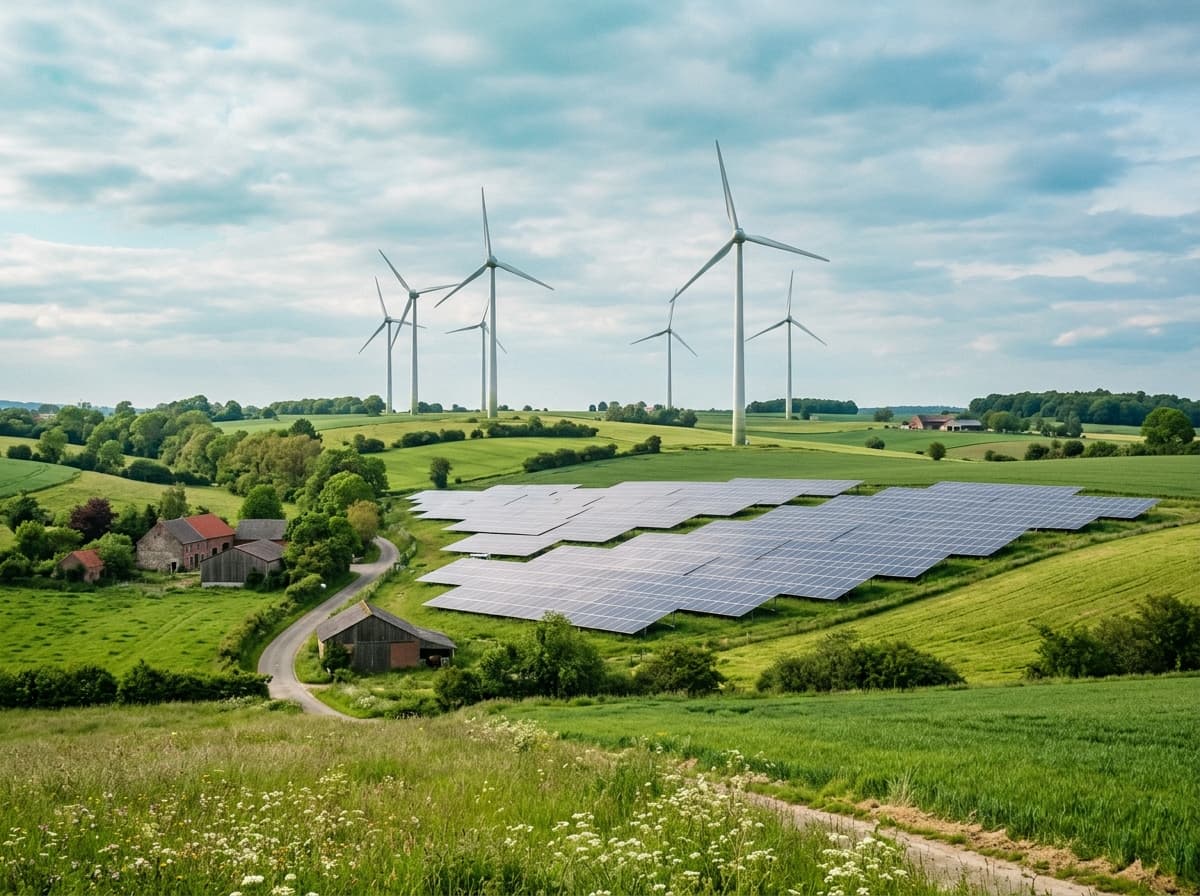
Ecopower is greener, and the gap is clear. In Greenpeace's reference ranking (monelectriciteverte.be), Ecopower scores 20/20, the maximum, because it invests in its own renewable facilities and reinvests profits into new projects. Bolt tops out at 13/20: its model of buying directly from small local producers is virtuous and transparent, but the company does not develop new generation capacity and its incentive for those producers to keep investing is hard to prove. In practical terms, if your absolute priority is to finance more Belgian wind turbines and panels, Ecopower has the edge. If you simply want to escape "green" offers backed by mere guarantees of origin — like those from Mega, Engie or Eneco — both are already a big step above.
Is Ecopower available everywhere in Belgium?
No, and it's often the deciding factor. Ecopower supplies only the Flemish Region, and only to its members. If you live in Wallonia or Brussels, you simply cannot become a customer, no matter how willing you are. In that case, the closest citizen equivalent is a cooperative that is a member of Cociter, the federation of Walloon cooperatives (also very well rated by Greenpeace), or a player like EnergyVision or Aspiravi. Bolt, by contrast, is available in all three regions: it's the only one of the two that any Belgian household can choose, wherever they live. For a Walloon or a Brussels resident in a hurry to switch to credible green without moving town, the "Ecopower or Bolt" question therefore settles itself in Bolt's favour.
Ecopower or Bolt: which is cheaper?
On the raw kWh, Ecopower is often ahead, but the full calculation is more nuanced. Ecopower operates at cost price: no profit margin, a variable rate indexed monthly to the wholesale market, which regularly places it among the cheapest kWh rates in Belgium. But you must tie up at least €250 in a member share (up to 20 shares) — a recoverable sum, not a lost fee, but still an entry ticket. Bolt sits around 14.6 to 16.25 c€/kWh on a single meter, or an estimate of roughly €1,380/year for 3,500 kWh on its variable offer, with no share to buy and no commitment. The upshot: over time and in Flanders, Ecopower generally works out cheaper per kWh; but if you don't want to tie up any capital or if you live outside Flanders, Bolt is easier to access. For reference, a pure price-hunter will find cheaper still with a Mega, top of the variable comparisons in mid-2026 — but without the same green credibility.
Do you have to become a member to sign up with Ecopower?
Yes, and it's the heart of the Ecopower model. You cannot be a customer without holding at least one €250 share; in return, you become a co-owner of the production tool, you vote at the general assembly and you can receive a dividend tied to the cooperative's results. It's a civic commitment as much as an electricity contract. Bolt asks for nothing of the sort: 100% online sign-up, no capital to contribute, cancellation possible at any time. This difference explains why Bolt appeals to mobile profiles (tenants, young households, people who move often) while Ecopower attracts those who want to anchor themselves lastingly in a local renewable project. On customer experience, Bolt posts one of the best Trustpilot scores in the sector (around 4.3/5), driven by an app widely seen as smooth.
Ecopower or Bolt: which should you choose for your profile?
The right choice depends first on your region, then on your relationship with commitment. You live in Flanders and environmental impact comes first? Ecopower is the most consistent choice: maximum green (Greenpeace 20/20), competitive cost price, and the feeling of owning a share of the transition. You're in Wallonia or Brussels, or you want zero capital tied up and fully online management? Bolt is the obvious choice: nationwide coverage, total flexibility, credible green even if it doesn't reach the top of the ranking. Finally, if your priority is pure price over the colour of the energy, look instead at the classic challengers in our ranking of electricity suppliers, or our dedicated guide to choosing the best green electricity supplier. In every case, check your exact situation on the official comparator of the CREG, VREG or CWaPE before signing, and compare every year.
Électricité verte comparator
Compare all électricité verte side by side.
Compare now →
Frequently asked questions
Julien suit le marché belge de l'énergie depuis plus de dix ans. Il a comparé des centaines d'offres d'électricité pour des ménages wallons, bruxellois et flamands, décortiqué les grilles tarifaires de Mega, Bolt, Luminus, Engie ou Eneco, et épluché les rapports de la CREG, du VREG et de la CWaPE. Sa conviction : la plupart des Belges paient leur électricité trop cher faute d'avoir comparé. Sur ce site, il traduit le jargon énergétique en conseils concrets, chiffrés et sans publicité déguisée.